

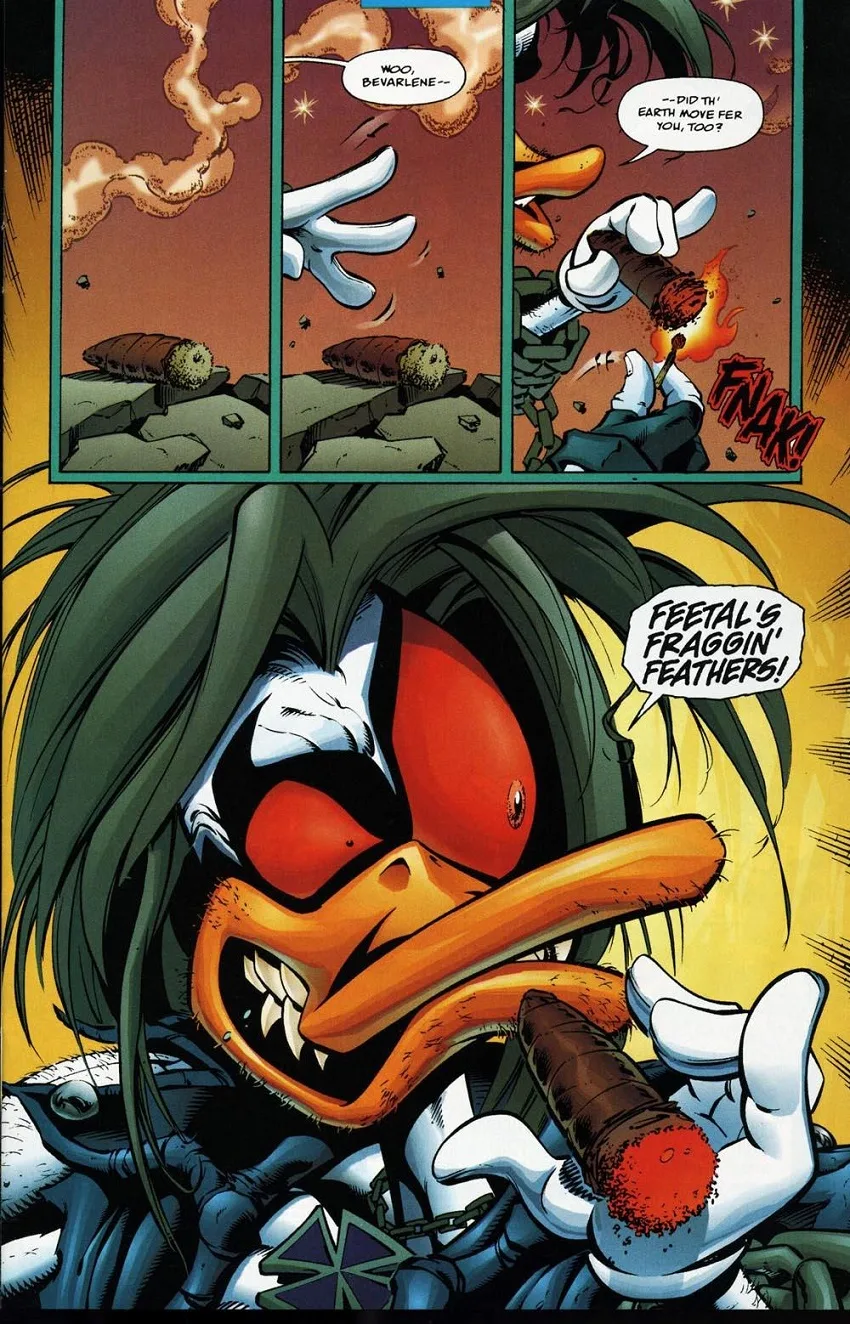
In 1996, DC and Marvel Comics joined forces to bring us “The Amalgam Age of Comics.” Amalgam Comics were, as the name would suggest, part of a blended universe mashing together characters, locations, and lore from both DC and Marvel. In some ways, it’s hard to even talk about these comics as a whole. Each issue is so wildly different from the others. Iron Lantern #1, for instance, is a seamless mixture of the Green Lantern and Iron Man narratives, which pulls you into a lived-in universe that feels as natural as its source materials. Lobo the Duck #1, on the other hand, is a fourth-wall breaking, satirical, and raunchy misadventure. It constantly points you to the artifice of the thing you’re reading. You’re reminded you’re a reader of a comic which seems to be spinning out of control. The various creative teams do a brilliant job of capturing the wide range of genres Marvel and DC have to offer, while playfully poking fun at their source material, and delivering stories that feel fully fleshed out, with plenty of stakes.

Bring On the Weird
Amalgam Comics could have very easily been run-of-the-mill. The creative teams could have simply slapped together a few nearly identical characters – like Quicksilver and The Flash, Aquaman and Namor, or Swamp Thing and Man Thing – and churned out a few hundred pages merely recreating familiar plotlines and showdowns. But Amalgam isn’t about retreading old territory. The stories in these pages are new. And the characters are often the results of strange combinations that you wouldn’t expect – Howard the Duck and Lobo, Wonder Woman and The Punisher, Professor X and Martian Manhunter. Yet there are still plenty of ways these unexpected combos point you back to the source material, urging you to read the pages and eras they have sprung out of.
X-Patrol #1 (by Karl and Barbara Kesel, Roger Cruz, and Jonathan Holdredge) is a stunning celebration of the X-Men and the Doom Patrol. The Kesels’ script mimics the melodramatic angst of 90’s X-Men comics, blending it with the near suicidal nature of Doom Patrol stories. It’s strange, it’s cheesy, and it’s so much fun. A lot of Cruz and Holdredge’s art is hyper-sexualized, leaning into the dramatic desire-laden atmospheres we find in both the teams who were mashed together to form this one. The artists’ panels are also dynamic, full of movement and intense action sequences. The whole thing is a love letter to the weirdos of comics.
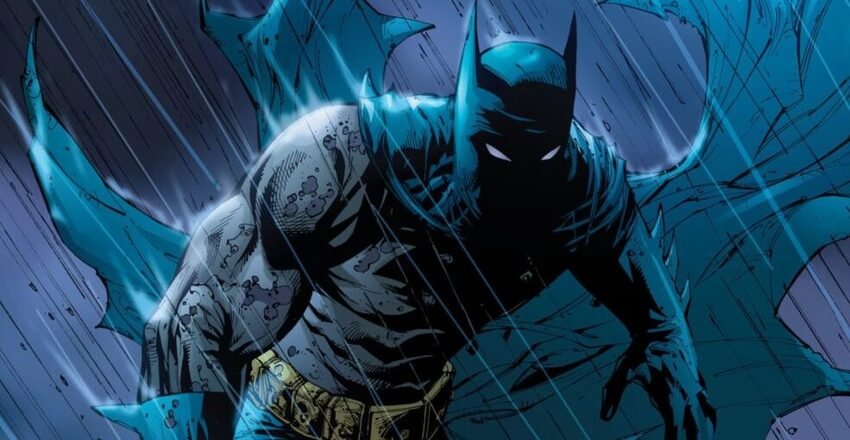
Similarly, Generation Hex #1 (by Peter Milligan, Adam Pollina, and Mark Morales) is a celebration of the dusty western atmosphere of some of DC Comics’ nichest titles, featuring amalgamations of some of Marvel’s oddest mutants. Bat-Thing #1 (by Larry Hama, Rodolfo DaMaggio, and Bill Sienkiewicz) relies mostly on DC’s repertoire, pulling some of Batman’s best supporting characters in to pair crime noir with a monster story that could make your spine-tingle. While there are plenty of issues in this series using big names – like the Captain America/Superman composite, Super Soldier – the thing that characterizes so much of Amalgam is its invitation for readers to explore the unsung, underrated, and underutilized areas of both companies.
Poking Fun While Having Fun
Of course, some DC and Marvel comics aren’t the best written things in the world. Plenty of Amalgam titles are more than happy to remind us of that. Spider-Boy Team-Up #1 (by Karl Kesel, Roger Stern, Jose Ladronn, and Juan Vlasco) is a relentlessly quippy issue. It sees our titular character get pulled through time in an increasingly complicated storyline. Spider-Boy’s many alterations of the space-time continuum lead to several reboots and major changes in continuity. The issue ends with Spider-Boy being overwhelmed by trying to keep up with all of the details. It’s not unlike DC and Marvel’s many rebrands, reboots, and retcons which leave many of their readers feeling just as overwhelmed.
Lobo the Duck #1 (by Alan Grant, Val Semeiks, and Ray Kryssing) introduces us to a couple of characters who address the reader, lamenting their fates as background actors who exist merely to die “just to emphasize how bad the bad guys are!” Bullets and Bracelets #1 (by John Ostrander, Gary Frank, and Cam Smith) milks the main characters’ shared past to extreme melodramatic effect. The story drips with emotional intensity, and yet still manages to be a gripping narrative from the first to last page. As much as Amalgam celebrates the wonderful and weird stories we know and love, it has just as much fun satirizing the cliches and tropes of bygone eras and reminding us how far storytelling has come in this medium we love so much.

Anything Can Happen
The final ingredients of Amalgam Comics’ delicious recipe are the high stakes and lived-in qualities of its universe. Characters would often reference, across multiple titles, life changing events – like “Secret Crisis of the Infinity Hour”, a combination of Secret Wars, Crisis on Infinite Earths, Infinity Gauntlet and Zero Hour. Each issue would also include footnotes referencing titles that didn’t exist, and many of them would end with letters pages from fans of the non-existent other chapters of these “long-running series.” As such, these stories would always begin somewhere in the middle. These were characters who had histories with each other and teams who had worked together for years. Their dynamics are well-worn and full of familiarity. To put it simply, when Amalgam Comics came on the scene, they acted like they had always been here.
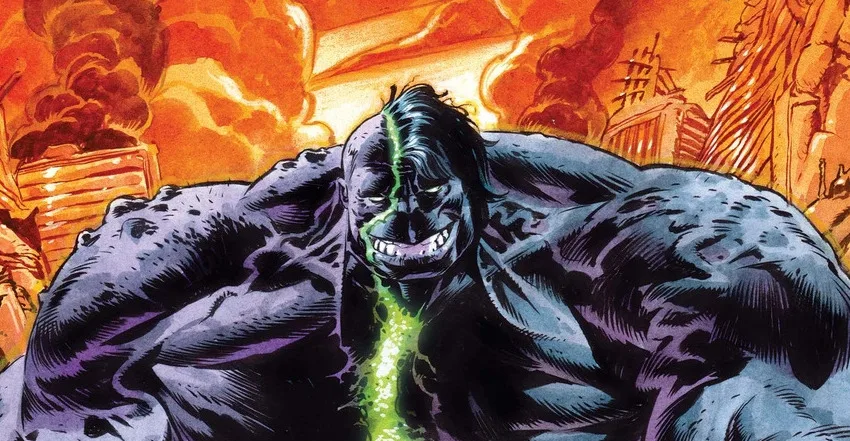
Not only did they have readers join narrative arcs which were already in full swing – some of them seeming like they’d have taken years of comics to get to that point – but they made us feel anything was possible. Amalgam only existed for two years. These characters could die, transform, or blow up the world, and there would be no pieces to pick up. And so, when issues like Chuck Dixon, Cary Nord, and Mark Pennington’s Bruce Wayne: Agent of SHIELD #1 ended in a surprisingly destructive and explosive way, you were left with the cliffhangers and nothing else. We will never know what happens to the Green Skull and his quest to destroy the world. Nor will we find out if the moon actually rams into the earth, like Lobo the Duck led us to believe it would. There’s no plot-armor here, not even for planet earth.
The Age of Amalgam comics existed for a pretty specific reason – to point readers to the comics and characters from Marvel and DC’s lines that inspired the stories you loved. But these issues went above and beyond. They not only celebrated the strange and underrated corners of comics, but they delivered compelling issues that will have you glued to every page.
The Amalgam Comics are collected in the DC/Marvel: The Amalgam Age Omnibus, which will be released on 24th September and can be pre-ordered at all good comic book shops, online retailers, eBay, and Amazon.



Leave a comment