

Written and art by Paru Itagaki. Translated by Motoko Tamamuro and Johnathan Clements. Lettering by Bendidi Ayoub. Published by Titan Comics.
I’ve spent a few Christmas periods in Japan, and it’s an odd experience. In Japan, Christmas is not a holiday, but it’s still acknowledged. The predominantly Shinto and Buddhist country still goes to work or school, eats fried chicken (KFC tricked the country into thinking that was the norm in 1974), or uses it as an excuse for couples to go on dates. It feels more like an aesthetic of winter for a few weeks than a milestone period of the calendar year. So, when Titan Comics announced the Christmas-themed manga Sanda by Paru Itagaki (Beastars), I was naturally curious how it would turn out. After reading the first two volumes, I can tell you that its presentation of Christmas is not what you expect.

Set in the year 2080, Japan’s population has rapidly aged due to a birthrate that sees 0.1% of the country under the age of 15. The children live in boarding schools where they’re treated as scarce resources and abide by strict rules to ensure they maintain their childlike manner for as long as possible. The concept of Christmas disappeared decades ago, its customs mostly forgotten. However, on 25th December, the 14-year-old Sanda is discovered to be a descendant of Santa Claus. This gives him the ability to transform into an adult (and extremely buff) Santa Claus, like Captain Marvel (a.k.a. Shazam). With a unique set of powers – some of which have a tenuous link to Old Saint Nick – and the help of two classmates, he fights to protect children everywhere and search for a missing schoolmate.
Sanda Volume 1 lays the foundations of the series. The inaugural eight chapters introduce the core group of characters – Sanda, Fuyumura, and Amaya – as well as the villain, the 92-year-old youth-obsessed principal. In classic shonen fashion, it establishes our hero’s power set through a series of challenges, giving readers a glimpse of their world. The second volume kicks off the ongoing story proper, while simultaneously expanding upon the series’ themes (which I’ll discuss in a moment) and continuing the world-building. It’s a tried and true formula you find in a lot of shonen manga. While there’s a risk that it might feel too familiar or generic to some readers, it works for Sanda as it builds forward momentum.
It’s not the first time that Santa Claus has been given the hero treatment. Grant Morrison and Dan Mora’s Klaus is an excellent example of this, combining various Santa Claus folklore into a tale that examines generosity and greed. On the other hand, Sanda doesn’t have anything to say about Christmas itself. Instead, the Christmas elements are used more aesthetically to drive themes about childhood, growing up, and generational conflict. Perhaps that’s fitting, continuing the Japanese approach to Christmas as an aesthetic dressing or an excuse for other things.
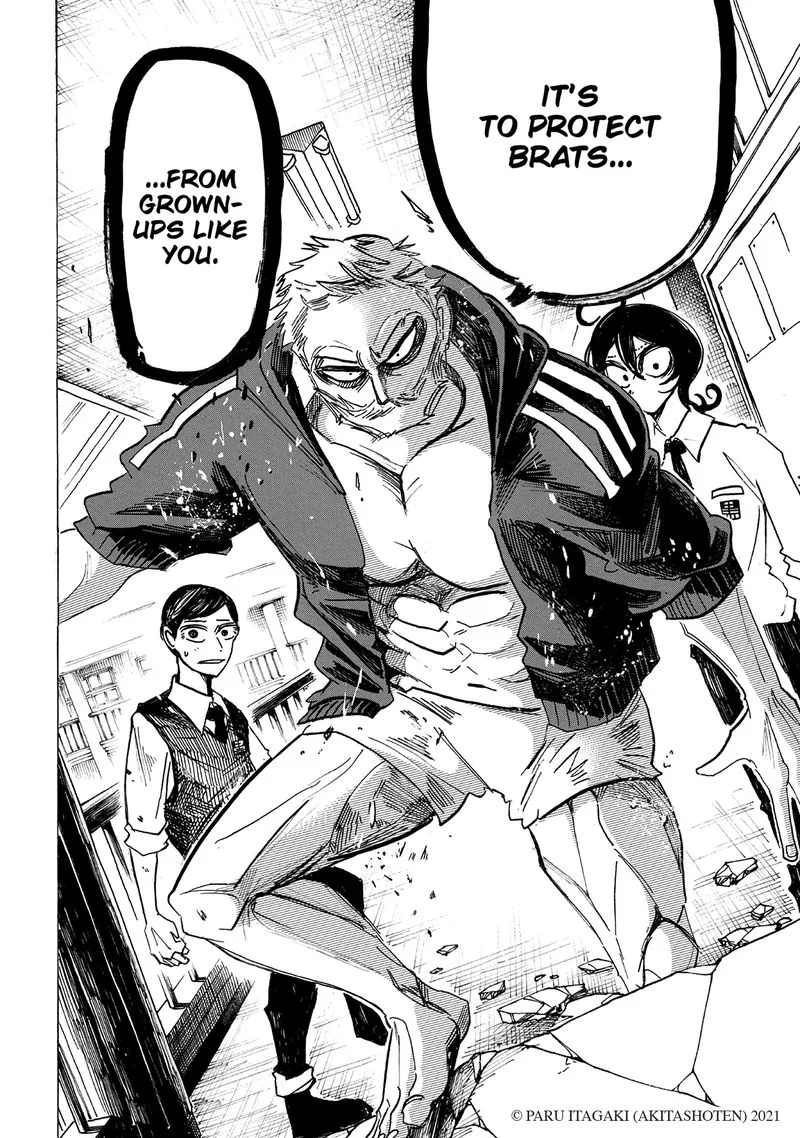
Paru Itagaki uses the premise to explore her core thesis that you cannot deny youth the milestone moments of maturity. By creating a restrictive environment for the teenage characters that infantilises them for as long as possible, the manga creates opportunities for them to rebel against it. Sometimes that’s confusing or emotional – like a friendship turning romantic or attending a funeral – but the comic argues these are valuable moments that youth should experience to grow. Most of these are executed in interesting and organic ways. However, there was one moment involving Santa Claus’ nudity that felt a bit clumsy. I could see what the manga was trying to do with this scene, but the execution seemed a bit contrived in getting to its conclusion.
Sanda’s premise also allows for some more surprising elements to unfold throughout. These often involve the character Fuyumura, who we’re introduced in media res, ready to stab a classmate with a large knife. Other moments involving her surprising actions, some of which are wild when you think about them too much, are often used as cliffhangers. And even when they’re not wild, the Itagaki’s cliffhangers add intrigue and make Sanda very bingeable.
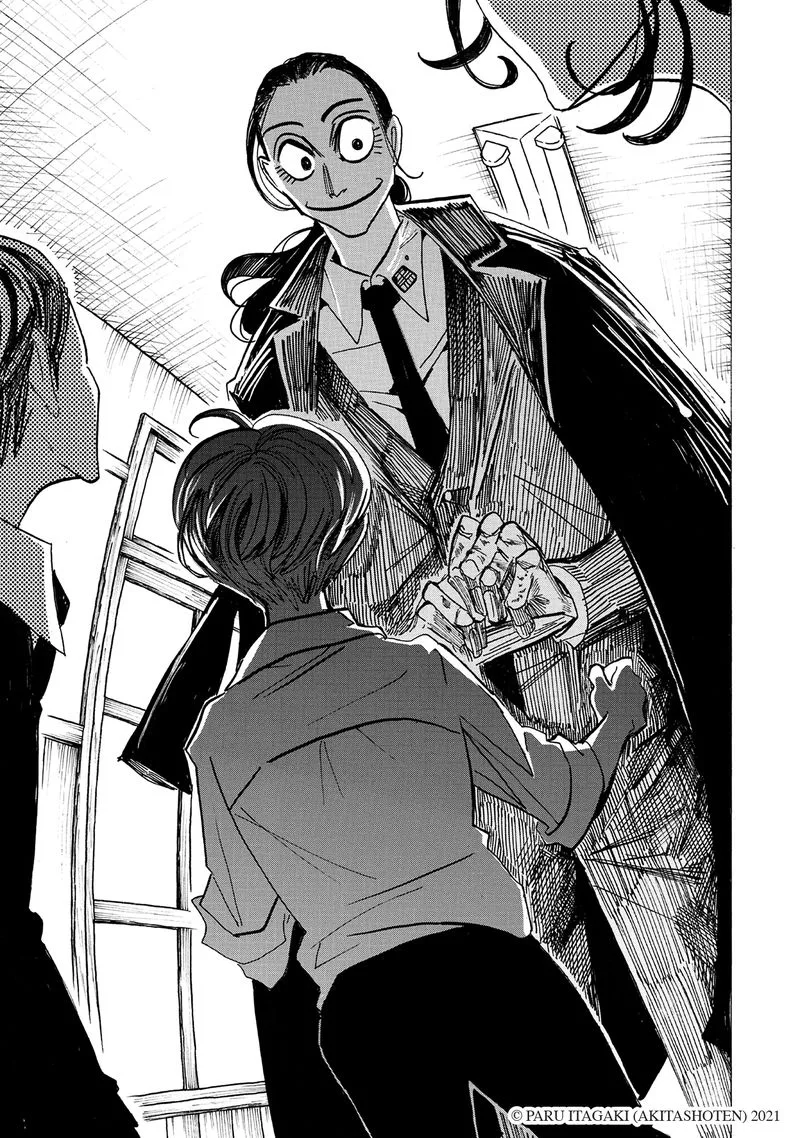
While it’s not immaculately detailed as some, Itagaki’s style is visually appealing. Her style comprises of solid linework with soft strokes. These give her characters rounded qualities, especially facial features, and accommodate wavy attributes in the designs. It allows the characters to be expressive through exaggerated and often quote large eyes and mouths. These stylistic choices are juxtaposed by rigid environments that represent the strictness of the manga’s world.
Sanda is a Christmas story that’s not a Christmas story. Instead, it uses the aesthetics of the holiday to uniquely explore generational conflict. The result is a manga – both bingeable and visually appealing – that can be read any time of the year.
Sanda Volume 1 and 2 are available in all good comic book shops, online retailers, eBay, Amazon/Kindle, and other places manga is sold. Volume 3 and additional volumes will be published in 2026 and beyond.

![Astro Biologist Pratess: Slice-Of-Life And Out-Of-Body Experiences [Extended Preview]](https://www.howtolovecomics.com/wp-content/uploads/2024/10/astro-biologist-pratess-feature-jpg.webp)

Leave a comment